
(ECNS) -- In South China's Shenzhen City, an unprecedented landfill environmental remediation project is underway, marking the largest volume landfill excavation and waste relocation project that has ever been launched in China.
Yulong landfill contains approximately 2.5 million cubic meters of waste, weighing an estimated 4.1 million metric tons, according to CCTV. The remediation project began in 2024 and is scheduled to be completed by the end of September 2026.

Yet, treating such a vast landfill presents significant challenges. A residential community lies around 100 meters from the site, with apartment buildings located adjacent to the waste disposal area.
To control odors, engineers have installed a combined gas extraction and air injection system. Methane produced by decomposing waste is continuously extracted, while fresh air is injected into the landfill. In addition, mobile equipment sprays deodorizer on-site, creating a multi-layered system for dust fall and odor control.
But why reopen a landfill that has been sealed for 20 years? The answer lies in where it sits. Once on the outskirts of the city, the Yulong landfill has now become part of Shenzhen's urban core as the city expanded.
Project staff told CCTV that technological advances now make it possible to fundamentally address the long-standing environmental risks posed by the landfill. With both urban development needs and technical conditions aligned, authorities opted for a full excavation and relocation rather than just partial containment.
How is the waste being treated then? Huang Kangfeng, technical director of the project, told CCTV that the site can process up to 6,000 metric tons of waste per day. The treatment system uses a five-stage sorting process that includes rotary drum screening, air separation, and magnetic separation.
Project designer Cao Yongmin said that the waste is ultimately separated into three categories: organic humus soil transported off-site for safe disposal, inorganic aggregates that is reused through resource recovery, and light materials sent to waste-to-energy incineration plants.
Incineration can generate toxic substances like dioxins if not properly controlled, so it must be properly regulated to ensure safe-waste incineration. Liu Hanjun, general manager of Shenzhen Energy Environment Co., Ltd., told CCTV that the key lies in temperature control, adding that inside the incinerator, gas remains at above 850°C for at least two seconds, a condition sufficient to completely decompose dioxins.
Real-time monitoring data from the plant's central control room shows that emissions from the six incinerators have never exceeded 0.004 nanograms per cubic meter, far below the regulatory threshold of 0.1 nanograms per cubic meter.
Beyond pollution control, the system also generates electricity, Liu said, adding that the facility can incinerate 5,100 metric tons of household waste daily, producing 3.4 million kilowatt-hours of electricity each day, which is enough to meet the monthly power needs of around 8,000 households.
Land remediation is being carried out in parallel with waste excavation. Once completed, the restored land will be integrated with nearby urban areas, releasing tens of hectares of land.
Authorities expect that rising land value appreciation and future industrial tax revenues generated from redevelopment will help offset initial remediation costs, forming a virtuous cycle of remediation, development, returns, and reinvestment.
The project is being hailed as a model case for sustainable redevelopment in megacities, demonstrating how environmental restoration can deliver ecological, economic, and social benefits all at the same time.
(By Gong Weiwei)
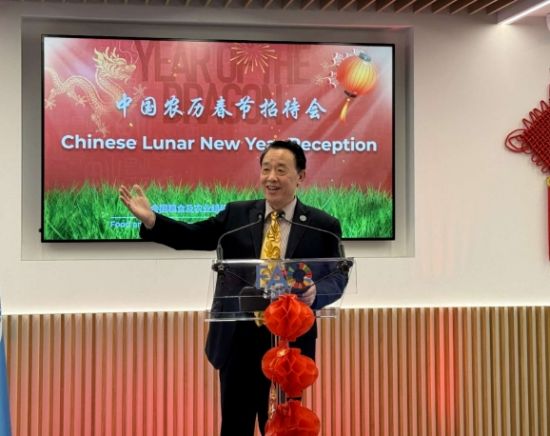
当地时间2月2日晚,联合国粮食及农业组织(粮农组织)在意大利首都罗马粮农组织总部举办中国农历春节招待会。多国驻意外交人员、意大利官员及粮农组织工作人员齐聚一堂,欢庆佳节。
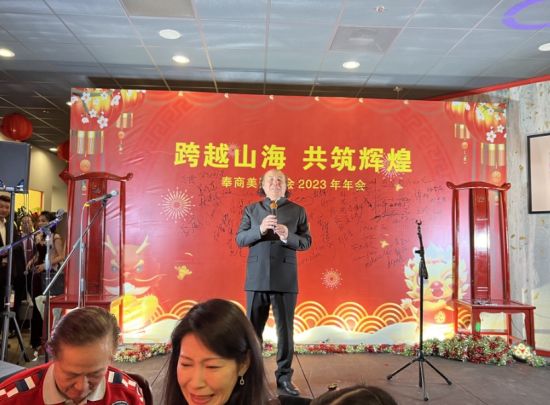
2024年1月31日,奉商美国总会在南加州工业市东北大饭店隆重举行了年会暨龙年新春联欢会,喜迎龙年新春。本次活动充满了浓厚的东北年味,活动内容丰富多彩,包括舞龙、送财神、民族舞蹈、乐器演奏等精彩节目,同时还有东北美食如小鸡炖蘑菇、东北大拉皮、血肠白肉酸菜等供应,让与会者尽情感受传统文化的魅力
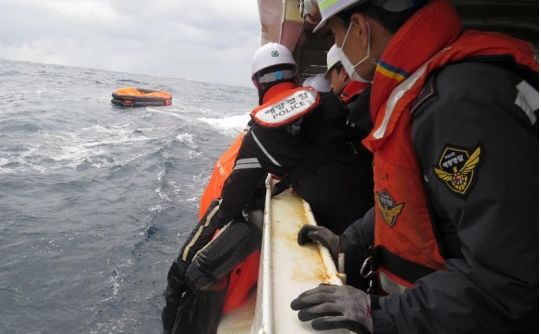
目前该艘中国货船已经于29日上午10时完全沉入海底。