
(ECNS) - Several Chinese universities have suspended recruitment for some arts-related majors while expanding programs in artificial intelligence, robotics and advanced engineering, prompting debate over whether higher education is becoming increasingly technology-focused, according to media reports.

Jilin University said last week it had stopped enrolling students in 19 majors, including music performance, composition and visual communication design. All six affected arts programs had already ceased admissions in 2024, according to the university's website.
Other institutions have made similar moves over the past year. East China Normal University in Shanghai announced in October that it would stop recruiting students for 24 majors, including advertising, painting and sculpture. Tongji University halted admissions for visual communication and environmental design programs last September. China University of Petroleum has scrapped all arts-related majors.
By the end of 2025, at least three "211" universities had withdrawn from recruiting students for arts disciplines entirely.
At the same time, universities have been moving quickly to establish new schools focused on emerging technologies. Many institutions have recently launched colleges specializing in embodied intelligence, AI, integrated circuits and other frontier fields.
Tongji University said that it had set up new schools of mechanical engineering and robotics, as well as automotive and energy studies. Ningbo University announced the creation of six new engineering colleges, including schools of integrated circuits and artificial intelligence, on the same day.
These changes do not signal the decline of arts education, Xiong Bingqi, head of the 21st Century Education Research Institute, told media.
"With the rapid development of AI, some entry-level design work has already been eliminated," Xiong said. If universities continue to train students in traditional ways, he explained, "they are bound to graduate into unemployment."
Xiong added that the adjustment reflected a shift from degree-oriented education toward skills and labor market demand, but warned against blindly expanding new engineering programs.
Ye Xiaoyang, a young economist who studies China's university admissions system, said the changes were better understood as a reallocation of internal university resources rather than AI "killing" arts education.
"The suspension of arts admissions and the creation of new engineering schools are happening simultaneously," Ye said, adding that universities, under pressure from industrial policy, employment outcomes and research assessments, tend to favor fields that generate measurable results.
AI, he said, has amplified this trend.
The shift reflects broader policy direction. China's Ministry of Education has urged universities to better align programs with national strategy and industrial demand, calling in December for expanded training of high-level engineers with strong innovation capacity. The push has accelerated the reallocation of university resources toward fields seen as critical to economic growth and technological self-reliance.
(By Zhang Jiahao)
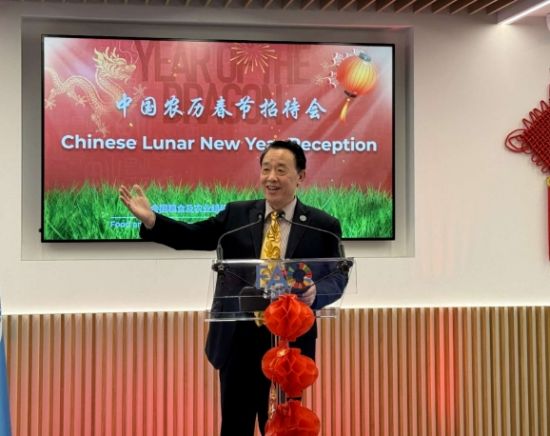
当地时间2月2日晚,联合国粮食及农业组织(粮农组织)在意大利首都罗马粮农组织总部举办中国农历春节招待会。多国驻意外交人员、意大利官员及粮农组织工作人员齐聚一堂,欢庆佳节。
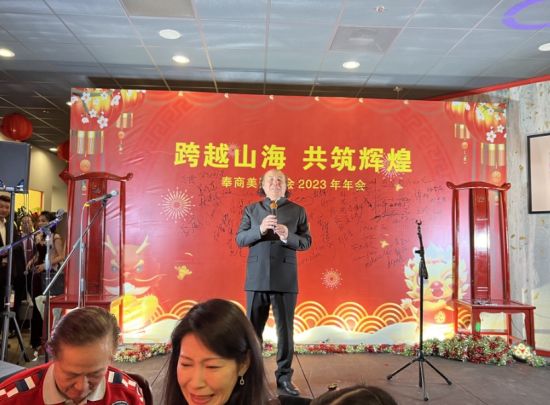
2024年1月31日,奉商美国总会在南加州工业市东北大饭店隆重举行了年会暨龙年新春联欢会,喜迎龙年新春。本次活动充满了浓厚的东北年味,活动内容丰富多彩,包括舞龙、送财神、民族舞蹈、乐器演奏等精彩节目,同时还有东北美食如小鸡炖蘑菇、东北大拉皮、血肠白肉酸菜等供应,让与会者尽情感受传统文化的魅力

目前该艘中国货船已经于29日上午10时完全沉入海底。