
By Mo Honge
(ECNS) -- China has launched its 23rd pilot Free Trade Zone (FTZ) in Inner Mongolia, positioning it as a hub for cross-border trade and green computing, leveraging its border location and renewable energy resources.
Officially inaugurated on April 11, the zone marks a shift from the export-driven models of coastal FTZs, focusing on sectors where Inner Mongolia possesses inherent advantages, including border trade, agriculture and husbandry, energy, and, notably, green computing power.

Zhao Fujun, a researcher specializing in international economic cooperation at the Development Research Center of the State Council, emphasized the zone's unique positioning.
"Inner Mongolia leverages the region's geographical and resource strengths — shared borders with Mongolia and Russia — and abundant renewable energy — to offer a differentiated value proposition to the global market."
A development plan issued by the State Council outlines measures to facilitate cross-border trade, including streamlined customs procedures and support for digital service exports. The Hohhot section will explore platforms for cross-border computing services
The plan also promotes integration of agriculture and cultural tourism, including the introduction of high-quality livestock breeds and the development of tourism linked to traditional Mongolian horse racing and wrestling.
A key pillar of the FTZ is its focus on green computing. Professor Cui Fan at the University of International Business and Economics in Beijing said the initiative aims to build a computing power hub to support large-scale AI model training and related industries.
Backed by major border ports such as Erenhot and Manzhouli, the FTZ is expected to strengthen the China-Mongolia-Russia Economic Corridor and expand regional trade and data cooperation.
Cui said Inner Mongolia's geographic position and proximity to Beijing could support the integration of domestic and international trade. He added that the region also holds potential in sectors such as agriculture, energy, green computing and pharmaceuticals.
The plan outlines five core functions for the zone: information exchange, transport and logistics, resource allocation, technological innovation and industrial cooperation.
Zhao said these functions will help attract talent, capital, information and data, forming a strong engine for regional economic development.
Cui also noted that Inner Mongolia's energy advantages are being converted into computing power capacity. "In 2025, the region ranked first nationwide in both the total scale of computing power and intelligent computing, further expanding its development potential," he said.
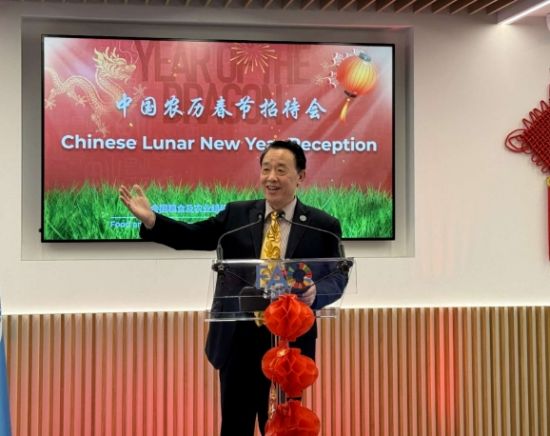
当地时间2月2日晚,联合国粮食及农业组织(粮农组织)在意大利首都罗马粮农组织总部举办中国农历春节招待会。多国驻意外交人员、意大利官员及粮农组织工作人员齐聚一堂,欢庆佳节。
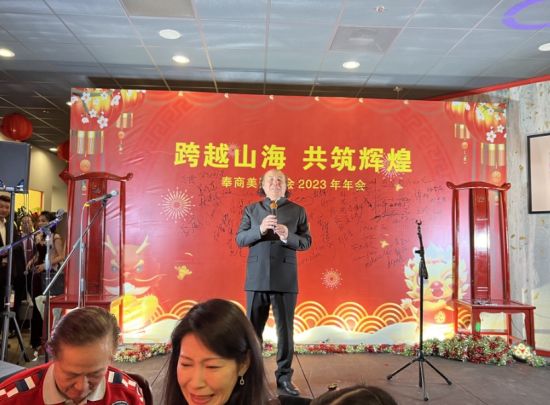
2024年1月31日,奉商美国总会在南加州工业市东北大饭店隆重举行了年会暨龙年新春联欢会,喜迎龙年新春。本次活动充满了浓厚的东北年味,活动内容丰富多彩,包括舞龙、送财神、民族舞蹈、乐器演奏等精彩节目,同时还有东北美食如小鸡炖蘑菇、东北大拉皮、血肠白肉酸菜等供应,让与会者尽情感受传统文化的魅力

目前该艘中国货船已经于29日上午10时完全沉入海底。