
(ECNS) -- The Pinglu Canal in Qinzhou, south China's Guangxi Zhuang Autonomous Region will open a new transport corridor connecting western China directly to Southeast Asia.
Analysts described the canal as China's first major "river-sea" transport route designed to integrate inland waterways with maritime shipping networks.
The project is expected to improve cargo movement between western Chinese provinces and members of the Association of Southeast Asian Nations, or ASEAN, reducing transport costs and delivery times for regional trade.

Guangxi sits on the golden waterway of Xijiang River. Yet, for centuries, the river in the Pearl River basin has flowed eastward before reaching the sea. Goods from southwestern China destined for Southeast Asia had to detour hundreds of kilometers via ports in southern China, increasing transport time and logistics costs.
The Pinglu Canal is set to transform logistics by directly linking Nanning with the Beibu Gulf, shortening sea routes by about 560 kilometers and opening the most convenient waterway to the sea for Guangxi and China's vast southwestern hinterland.
Trade between Guangxi and ASEAN has expanded rapidly in recent years, driven by the benefits of the China-ASEAN Free Trade Area and the Regional Comprehensive Economic Partnership. As trade volumes surge, logistics efficiency and transportation costs have become crucial to regional competitiveness.
The multimodal transport system enabled by the Pinglu Canal is expected to dramatically reduce costs. Bulk cargo from western China will be able to travel along the Xijiang River through the canal directly to Beibu Gulf port, where goods can either be transferred onto vessels or distributed across ASEAN and other global markets.
According to expert estimates, once the canal opens, logistics costs for exports from southwestern China could fall by 18% to 30%, saving more than 5 billion yuan ($690 million) annually. That could enhance the competitiveness of industries deeply involved in intermediate goods trade with ASEAN, including automobiles, machinery, new energy products and electronic equipment.
Beyond reducing logistics costs, the canal's greater significance lies in helping Guangxi transition from a pass-through economy into a true regional hub economy.
With the integration of river, sea, rail and air transport networks, Beibu Gulf Port is expected to evolve from a standalone cargo terminal into a major international logistics hub linked to inland waterways and global shipping routes.
Minerals, fruits and agricultural products from ASEAN countries will be able to move efficiently through the canal into southwestern China, while industrial equipment, new energy technologies and electronic components manufactured in western China can be shipped rapidly to Southeast Asian markets.
As global supply chains continue to restructure, trade ties between China and ASEAN are becoming increasingly important. China and ASEAN remain each other's largest trading partners, with Guangxi serving as a crucial platform for that relationship.
The Pinglu Canal acts as a massive connector embedded in the China-ASEAN land-sea trade corridor, helping the New International Land-Sea Trade Corridor — a key logistics route linking western China to global markets — achieve a fully integrated transport network spanning rail, road, river, sea and air.
Once fully operational, the canal will make trade and supply-chain links between China and ASEAN even closer and more efficient.
(By Gong Weiwei)
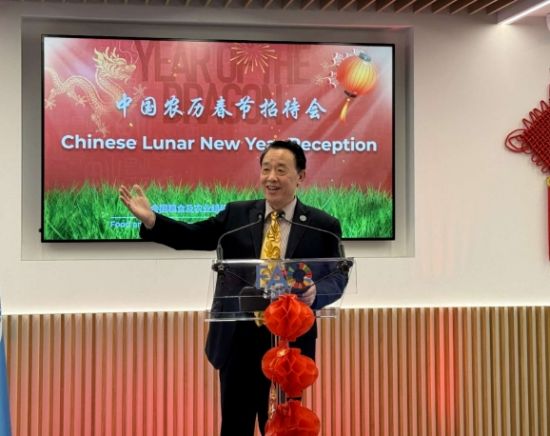
当地时间2月2日晚,联合国粮食及农业组织(粮农组织)在意大利首都罗马粮农组织总部举办中国农历春节招待会。多国驻意外交人员、意大利官员及粮农组织工作人员齐聚一堂,欢庆佳节。
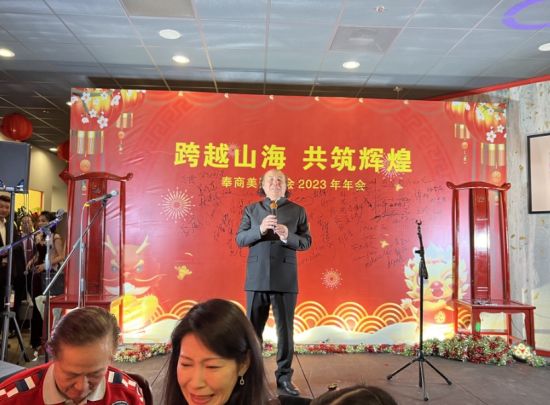
2024年1月31日,奉商美国总会在南加州工业市东北大饭店隆重举行了年会暨龙年新春联欢会,喜迎龙年新春。本次活动充满了浓厚的东北年味,活动内容丰富多彩,包括舞龙、送财神、民族舞蹈、乐器演奏等精彩节目,同时还有东北美食如小鸡炖蘑菇、东北大拉皮、血肠白肉酸菜等供应,让与会者尽情感受传统文化的魅力

目前该艘中国货船已经于29日上午10时完全沉入海底。